Showing posts with label book review. Show all posts

Tuesday, June 21, 2016

Top Ten Tuesday: Favorite 2016 Releases


I looked at this meme, hosted by the Broke and the Bookish, and thought, I haven't read many new releases this year! And then I looked at my list of reads and discovered I read more new books than I thought.

My favorite new releases so far:
Visitor: A Foreigner Novel Cover
I enjoy the Foreigner series by C. J. Cherryh, (though I'm not thrilled with the covers) and I particularly liked this one because I've been waiting a long time for the shoe that drops towards the end of this book. Some people have been disappointed in Visitor because there isn't as much action as there is in many of the novels, but I enjoyed getting to know the kyo in Visitor, and getting better acquainted with the tensions between humans - ship personnel, station/rescued personnel, & Mospherians - in Tracker, also released this year. I like character development, and if the writing is good and the characters are interesting, a book doesn't have to have an action-packed plot to keep my interest.
The Life of Elves Cover
Speaking of  books with more character than plot, this was one that grew on me. The Life of Elves by Muriel Barberry was a slow build, and I particularly enjoyed the French characters and descriptions of the village. This was one I had to read a bit at a time, and I didn't care so much about the characters in the Italian city. I haven't read The Elegance of the Hedgehog, so I don't know how it compares.
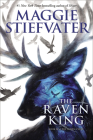

The Raven King (the Raven Cycle, Book 4) Cover
The fourth and final book of the Raven Boys cycle, The Raven King by Maggie Stiefvater, was very good. I loved the characters in these books - Blue, Adam, Gansey, Noah. The plot was a bit thin by this time, but Stiefvater writes complex, believable characters.

Others I've read:

And what's on my horizon?

Homegoing Cover Homegoing by  Yaa Gyasi (historical fiction, out this month)
The Underground Railroad Cover Underground Railroad by Colin Whitehead (alternate history, due September 2016)

Monday, June 20, 2016

Among Others

Among Others Cover Finished Among Others this weekend, and loved it. Not sure why it took me so long to get to this. I think I had some fear that it would be "book dropping" and no plot, or would be "just" another coming of age story. But I am happy to say that I fell into this one with a sense of wonder, and that wonder was still intact at the end of the book.

It is a love letter to science fiction and fantasy for us book nuts, and I'm not sure the book dropping furthers the plot, and it is a coming of age story. But in my opinion the writing is better than average.

Curiousity about  what happened to Morganna kept teasing me further in, and I liked the understated use of magic, which can be read as real or something Morwena creates. Finally, she sticks the ending - both resolving the relationship between Morganna and Morwena, and allowing Morwena to stand up to her mother.

Monday, May 18, 2015

Thanks to my friend Regina for coordinating a trip to Woodland Gardens for a free Yoga class last Thursday! It also motivated me to visit a class at the local rec center on Saturday morning after I began mowing my jungle in the front yard and met my new next door neighbors.

Here are two books I've read in the past four months that I did spend time reflecting on.


Land of love and drowning is Tiphanie Yanique's first novel, and it's a fascinating one. The action follows the lives of two sisters, Eona and Annette, from their childhood (and the transfer of the Dutch Virgin Islands to the USA) through much of the twentieth century.

The sisters are over a decade apart in age, and consequently, their experiences and expectations are quite different. I quite enjoyed the differences in dialogue, the puzzle of what was “real” or “magically real” and particularly the development of Eona’s character over time.

The story touches on many themes and blends history and folklore into what I eventually found an enchanting and haunting tale. The book was a slow starter for me, and I am grateful to the Literary fiction by people of color group on Goodreads for helping me finally finish the story.

Thanks to the early reviewers program on Library Thing for providing a copy of this novel for review consideration.

  Friedhelm Lubisch founded a respected construction company and donated a fortune to the Association of Displaced Persons in Germany. But his son Robert never lived up to his expectations.

While going through his deceased father's papers, Robert is reminded of the story his father told him of stealing a dead SS guard's papers and running away from the war front. He also finds a photograph of an unidentified woman from the same time period, and decides to try and identify her.

This novel deftly weaves past and present together to consider the question of identity. What makes us who we are? Our family? Our actions? Our secrets? What is the cost of keeping secrets? Or of breaking silence? The past is the relationships and actions of five young men and women, close friends on the eve of World War II, who are separated by actions and ideaology. The present is Robert's search for the identity of the woman in his father's photo. The intersection of the two results in a murder and the uncovering of at least two secrets.

First published in Germany as Wer das Schweigen bricht (the one who breaks the silence), this novel won the 2012 Deustcher Krimi prize for best crime novel. Translated into English by Aubrey Botsford.

I received an electronic copy of Silence by Mechtild Borrmann from NetGalley for review consideration.

Friday, November 2, 2012

Formation of the Middle East

Read David Fromkin's book A Peace to end all peace on the formation of the Middle East as a result of interactions between Western Europe and the Ottoman Empire during World War I as part of an online group read.
What I liked about it:

Big picture view of Western European interests that were influential in creating what we call the Middle East out of the remains of the Ottoman Empire (Turkey/Middle East/Central Asia). Particularly British, as well as (to a lesser extent) France, Russia/USSR.

My impressions:

Britain's interests were conflicted – they started out wanting to protect the overland path to the Indian Empire from their rivals in Europe & Russia. However, various parts of the empire (India = Simla, Egyptian protectorate, & various factions in London ) had different points of view at different times. Kitchener/Mark Sykes/ David Lloyd George/Winston Churchill are the names I have retained. Alliances & agreements between the Allies changed also.

Britain supported two sons of Sheriff Hussein of Mecca for “rulership” while France supported the Saud family. It’s no wonder there is conflict, as the form of government the region was accustomed to was destroyed, and there was no clear authoritative form of government or monarch to put in its place.

Britain ended up with the biggest “piece of the pie” – Palestine, “Transjordan” (which was part of Palestine), Egypt, Persia (Iran), Iraq (created out of 3 provinces of the empire); France with Lebanon (which started out as part of Palestine) & the Saudi Peninsula, including Mecca. And Turkey gained independence.

By the time World War I was over & treaties & agreements were concluded, Western European governments didn’t have the will or the funds to maintain a presence to control their client states. And the client states didn’t want to be clients, but independent in their own right.

Fromkin draws a parallel between the time it took for Western European government to develop after the fall of the Holy Roman Empire and the time it may take for a "secular" form of government to develop in the Middle East. Stilll chewing on this.

A Killing in the hills of West Virginia

A Killing in the hills by Julia Keller is a good if imperfect first mystery for the Pulitzer Prize winning journalist. Set in the fictional town of Ackers' Gap, West Virginia, the descriptions of the setting and the lives of the people there are the strength of the book. I'm also intrigued by the protagonists. Belfa (a native of Acker's Gap with her own history & baggage), now divorced, has returned to her hometown with her teenage daughter, Carla, and become the district attorney. She and the sheriff are uncompromising in their fight to eliminate drug traffic in their community.

When Carla is present at the shooting of three old men at a local restaurant, no one has a clue who did it or why.

I don't like mysteries that put you inside of the head of the murderer, and this is one of them. We know from the start who 'dun it and why. I didn't find this character sympathetic at all, I would probably have enjoyed it more if he was drawn with more depth.

Carla's choices were also a bit suspect for me, though she isn't a cardboard character like the killer.

Finally, the reveal of the person responsible for ordering the killing came a bit out of left field. Again, I would have enjoyed it more if this character had been drawn with more depth, showing the pressures that provided the impetus for his involvement.

Drugs, small towns, and lack of financial opportunities are a rich source to draw from. I hope Julie Keller can take the time to create more nuanced villans the next time around

Wednesday, March 30, 2011

Through black spruce by Joseph Boyden

This is a novel of love and loss and persistence set primarily in Ontario at the southern end of the James Bay.

Though about half the narration takes place northern Ontario in their Cree community, and half in New York City, the taiga forest is obviously a well-loved home for both narrators. But this is not a novel full of action.

What hooked me was the tone of the narrators, Will & Annie, reflective and measured, always reaching out to the other. The sentences are short, terse really, but clear and descriptive. Yet the picture is tantalizingly out of focus, and it takes quite awhile to put the pieces together, and even then there are things unfinished, unsaid, unresolved.

The first chapter is clearly a man talking to his nieces, obviously in trouble and talking to help keep himself moving. But what kind of trouble isn’t clear. In trouble with alcohol? When the first paragraph of a novel is a description of what to blend with rye whiskey, you know alcohol plays an important role in the story. Alcohol plays a role through rest of the chapter, a description of Will’s first plane crash onto a partially frozen creek lined with black spruce, but not the only one. The other thing that plays a significant role in the story are his family and friends, particularly his nieces; the final paragraph of the chapter makes clear that getting back to them is keeping the narrator going.

The second chapter introduces niece Annie, who lets us know her uncle is in the hospital, in intensive care and unconscious. Why isn’t clear until we’re a quite a way into the story. Annie has been away for a long time, out of communication with her uncle (and her mother). We learn eventually that she started out searching for her missing sister, and followed her trail to the glamorous life of a model, locating her sister’s “friends” and living the high in New York City, until Annie’s life there falls apart.

Her friend Eva, a nurse at the hospital, encourages Annie to talk to her uncle. Her first attempt is awkward, and it’s clear she feels guilty, somehow responsible for his ending up here (It took me awhile after I finished the book to figure out why.) But Annie and Will have a bond because, as Annie says, speaking of her sister, “I bet you believe she’s still alive . . . Nobody else around here does but you and me, I bet.” The other bond they have is they both love living in the bush, hunting and trapping.

The remainder of the book alternates back and forth between Will’s voice and Annie’s, and we are left to attempt to piece together the story of what happened to Suzanne and to Will. What happened to Suzanne? Is it possible that she will come back? And what about Will? What happened to him? Clearly he and his niece both desire his return to the land of the living. Will he make it?

This novel won the Giller Prize in 2008.

The devil's alphabet by Daryl Gregory

An intriguing story of the ongoing struggles of a small town that became victim to a virus which killed a third of its people, but didn't spread outside the village. Except for a few “skips” like Paxton, the protagonist, who don’t get sick, the inhabitants become:

• Argos: abnormally tall, angular, and strong, and they cannot reproduce (Deke & his wife)
• Betas:  hairless and dark; Beta women women reproduce parthenogenically (JoLynn and her daughters)
• Charlies: corpulent and in late middle age the men start secreting an addictive hallucinogenic substance through their skin. (Paxton’s father, Reverend Martin is a Charlie, as is Rhonda, the mayor of Switchcreek, TN)

Paxton returns home for the funeral of his childhood friend JoLynn and with his friend Deke seeks to find out whether JoLynn really committed suicide. And to make things more complicated, the same virus breaks out in a city in Ecuador.