Showing posts with label fiction. Show all posts

Monday, August 8, 2016

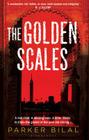
Golden Scales: a mystery series set in Egypt

Set in the late 1990s, Golden Scales is the first in a projected 10-book series about Makana, a exiled police inspector from Sudan, covering the 1990s up to the Egyptian revolution.

On the surface this is a mystery, with the main character, Makana, hired by a powerful businessman, Hanifi, to locate a missing soccer player, Adil. But life is rarely simple, and personal & political ramifications proliferate as Makana searches for Adil in Cairo. The story is laced with uncomfortable parallels of loss between Hanifi's & Makana's family, as well as between the British woman Liz & Makana.

Makana's integrity after the '90s coup in Sudan endangered his family. Now, living in exile in Egypt, he again attempts to balance integrity & survival where the practice of one attribute endangers the implementation of the other. I liked this novel. It can be read as a straight-up mystery, but following Makana, his friends (and his enemies) also gives a glimpse of some of the societal concerns shaping life in Egypt and Sudan.

The fifth book in the series, City of Jackals, was published in June 2016. For more information about the author, see his two websites: Parker Bilal (his pen name for mysteries) or Jamal Mahjob (his literary fiction) or his Wikipedia entry or this interesting article from 2013. Thanks to Suzanne on Library Thing for introducing me to this series!

Title: Golden Scales
Copyright: 2012
Genre: mystery
Publisher: St. Martin's Press
Author: Parker Bilal (pseudonym for Jamal Mahjob)

Also listed in Akilah's Diversity on the Shelf and Naz' Read Diverse Books challenges.


Thursday, July 21, 2016

New Releases on the Horizon

Here are some books to be published later this year (or possibly into 2017) that I'm interested in. And they fit in well with this week's top ten Tuesday theme as well. Check out the "Speculative Fiction in Translation" post at Tor.com if you're interested in more translated science/speculative fiction titles.

Everfair Cover


 Everfair by Nisi Shaw is a steampunk alternate history of the Congo. Thanks to Jordan at Forever Lost in Literature for highlighting this on her blog this week.

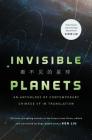
Invisible Planets: Contemporary Chinese Science Fiction in Translation Cover


Invisible Planets is a collection of science fiction stories by Chinese authors translated by Ken Liu. Due out in November 2016.


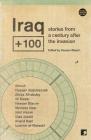
Iraq + 100 Cover

 Iraq + 100 is a collection of speculative fiction stories by Iraqi authors, imaging what Iraq will be like in 2103, edited by Hassan Blasim.

Memoirs of a Polar Bear Cover


Memoirs of a Polar Bear by Yoko Tawada, tranlsated by Susan Bernofsky, is about a family of writers and performers in East Germany.


Frankenstein in Baghdad by Ahmed Saadawi & winner of the 2014 prize for Arabic fiction. Jonathan Wright is translating it into English. (Arabic cover shown.) Hadi al-Attag roams the city of Baghdad, collecting the parts of people who have been dismembered in explosions & sewing them into one body. When a displaced soul enters the body, it comes to life and sets about taking revenge on those who killed its parts.


Spanish Women of Wonder is a collection of stories written in Spanish and translated into English by Sue Burke. This was a kickstarter project, and I'm sure these authors will be new to me. (No cover available.)

2018

And finally, though this isn't a translation, it's one I'm really excited about: Ursula LeGuin's Earthsea novels are being published in an omnibus edition with illustrations by Charles Vess!


Friday, November 2, 2012

A Killing in the hills of West Virginia

A Killing in the hills by Julia Keller is a good if imperfect first mystery for the Pulitzer Prize winning journalist. Set in the fictional town of Ackers' Gap, West Virginia, the descriptions of the setting and the lives of the people there are the strength of the book. I'm also intrigued by the protagonists. Belfa (a native of Acker's Gap with her own history & baggage), now divorced, has returned to her hometown with her teenage daughter, Carla, and become the district attorney. She and the sheriff are uncompromising in their fight to eliminate drug traffic in their community.

When Carla is present at the shooting of three old men at a local restaurant, no one has a clue who did it or why.

I don't like mysteries that put you inside of the head of the murderer, and this is one of them. We know from the start who 'dun it and why. I didn't find this character sympathetic at all, I would probably have enjoyed it more if he was drawn with more depth.

Carla's choices were also a bit suspect for me, though she isn't a cardboard character like the killer.

Finally, the reveal of the person responsible for ordering the killing came a bit out of left field. Again, I would have enjoyed it more if this character had been drawn with more depth, showing the pressures that provided the impetus for his involvement.

Drugs, small towns, and lack of financial opportunities are a rich source to draw from. I hope Julie Keller can take the time to create more nuanced villans the next time around

Wednesday, March 30, 2011

Through black spruce by Joseph Boyden

This is a novel of love and loss and persistence set primarily in Ontario at the southern end of the James Bay.

Though about half the narration takes place northern Ontario in their Cree community, and half in New York City, the taiga forest is obviously a well-loved home for both narrators. But this is not a novel full of action.

What hooked me was the tone of the narrators, Will & Annie, reflective and measured, always reaching out to the other. The sentences are short, terse really, but clear and descriptive. Yet the picture is tantalizingly out of focus, and it takes quite awhile to put the pieces together, and even then there are things unfinished, unsaid, unresolved.

The first chapter is clearly a man talking to his nieces, obviously in trouble and talking to help keep himself moving. But what kind of trouble isn’t clear. In trouble with alcohol? When the first paragraph of a novel is a description of what to blend with rye whiskey, you know alcohol plays an important role in the story. Alcohol plays a role through rest of the chapter, a description of Will’s first plane crash onto a partially frozen creek lined with black spruce, but not the only one. The other thing that plays a significant role in the story are his family and friends, particularly his nieces; the final paragraph of the chapter makes clear that getting back to them is keeping the narrator going.

The second chapter introduces niece Annie, who lets us know her uncle is in the hospital, in intensive care and unconscious. Why isn’t clear until we’re a quite a way into the story. Annie has been away for a long time, out of communication with her uncle (and her mother). We learn eventually that she started out searching for her missing sister, and followed her trail to the glamorous life of a model, locating her sister’s “friends” and living the high in New York City, until Annie’s life there falls apart.

Her friend Eva, a nurse at the hospital, encourages Annie to talk to her uncle. Her first attempt is awkward, and it’s clear she feels guilty, somehow responsible for his ending up here (It took me awhile after I finished the book to figure out why.) But Annie and Will have a bond because, as Annie says, speaking of her sister, “I bet you believe she’s still alive . . . Nobody else around here does but you and me, I bet.” The other bond they have is they both love living in the bush, hunting and trapping.

The remainder of the book alternates back and forth between Will’s voice and Annie’s, and we are left to attempt to piece together the story of what happened to Suzanne and to Will. What happened to Suzanne? Is it possible that she will come back? And what about Will? What happened to him? Clearly he and his niece both desire his return to the land of the living. Will he make it?

This novel won the Giller Prize in 2008.

The devil's alphabet by Daryl Gregory

An intriguing story of the ongoing struggles of a small town that became victim to a virus which killed a third of its people, but didn't spread outside the village. Except for a few “skips” like Paxton, the protagonist, who don’t get sick, the inhabitants become:

• Argos: abnormally tall, angular, and strong, and they cannot reproduce (Deke & his wife)
• Betas:  hairless and dark; Beta women women reproduce parthenogenically (JoLynn and her daughters)
• Charlies: corpulent and in late middle age the men start secreting an addictive hallucinogenic substance through their skin. (Paxton’s father, Reverend Martin is a Charlie, as is Rhonda, the mayor of Switchcreek, TN)

Paxton returns home for the funeral of his childhood friend JoLynn and with his friend Deke seeks to find out whether JoLynn really committed suicide. And to make things more complicated, the same virus breaks out in a city in Ecuador.